In recent years, people are more and more aware of the importance of ecological environment, and realize that economic development can not be achieved at the cost of ecological environment, because the natural environment is the material basis for human survival and reproduction, and the protection and improvement of the natural environment is the prerequisite for human survival and development.
According to a study published in scientific reports on March 19, 2020, opening plastic packaging (such as chocolate plastic bags and bottles) in daily work may produce a small amount of small plastic particles less than 5mm long, namely micro plastics.
At present, the research has not been clear about the risks and possible toxicity they bring and how they are absorbed by human beings, and the next research is needed for human beings.
From the above research, everyday plastics can bring micro plastics that may be harmful to health. However, there is more controversy about plastics.
Today, we are going to talk about the relationship between plastic and microorganism, one of the main environmental pollution, and discuss how to use microorganism to solve the problem of plastic pollution. It is hoped that this paper will give some inspiration to relevant industries and scientific and technological practitioners and remind readers to pay attention to environmental protection.
Advantages and disadvantages of plastics
In the 1950s, with the advent of the "plastic age", the construction technology has undergone tremendous changes. The development of fossil fuel industry has brought a wide range of plastics, from insulation materials to mechanical materials to coatings, all kinds of materials have changed. Today, plastics are still a ubiquitous part of every building component.
It's not just architecture, it's actually plastic everywhere. Plastic can be found in the clothes we wear, the houses we live in and the cars we drive. Plastic can also be found in the TV we watch, the computers we use and the tools we use. People use plastic products in various places to make life more convenient, safer and enjoyable.
But in fact, the raw material of plastics mainly comes from oil or natural gas, which will cause many problems. For example, oil resources are very limited. For example, in the process of oil extraction and refining, it is very easy to cause pollution. In addition to the standard pollution caused by the mining and refining process, there is the potential for major ecological damage accidents such as the massive oil spill along the Gulf Coast in 2010.
On the other hand, toxic chemicals are released during the production of plastics. A lot of harmful chemicals will be produced along with the manufacture of plastics, and then will inevitably enter and destroy our ecosystem through water, soil and air. Many of these chemicals are persistent organic pollutants, one of the most destructive toxins on earth.
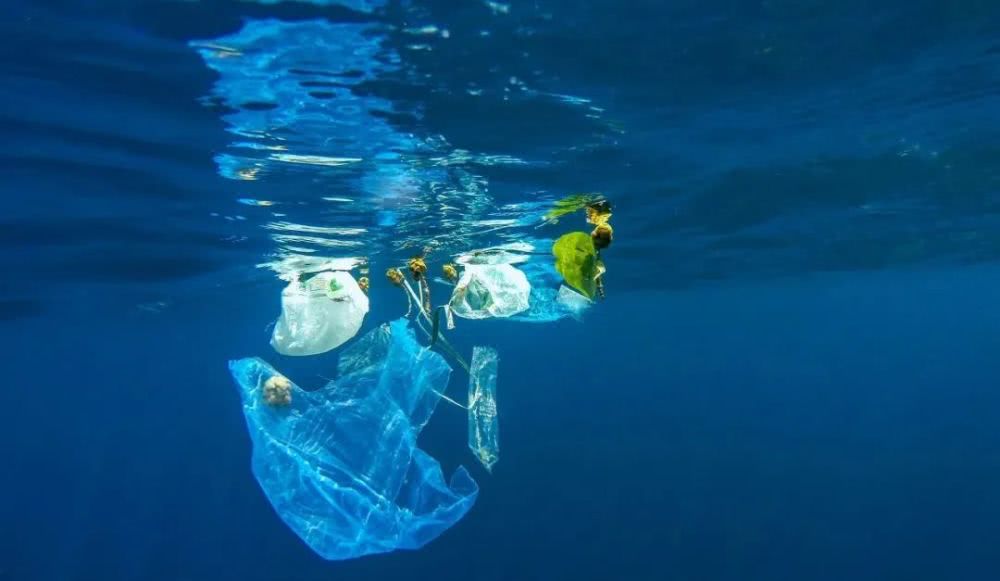
What's more, plastics are hard to degrade. Some plastic bags and bottles can go through hundreds, thousands, or even millions of years without degradation, because most microorganisms in nature do not use plastic as food, so they will not decompose it.
However, some new microbes discovered recently may help us solve this problem.
New bacteria help plastics degrade
Polystyrene is the key component of disposable plastic products such as disposable cups, tableware, toys and packaging materials. At present, the production and consumption of polystyrene in various industries are rising exponentially, which poses a great threat to the environment, and the low efficiency of waste utilization aggravates this problem.
According to the statistics of the United Nations, about 300 million tons of plastic waste are produced every year in the world, only about 10% of which are recycled. It is estimated that India consumes about 16.5 million tons of plastic per year. AIPMA estimates that the plastics industry produces about 14 million tons of polystyrene, all of which are non degradable.
Recently, the Prime Minister of India announced that by 2022, disposable plastic products will no longer be used in India, which accounts for one fifth of daily plastic products, so this initiative will be of great significance in India.
Recently, however, Richa priyadarshini's team from SHIV nadar University in Grand Noida, Uttar Pradesh, India, discovered two kinds of "edible plastic" bacteria from the wetland in Grand Noida, which may provide an environmental alternative to solve the plastic pollution crisis.
The two bacteria isolated by the team are the exiguobacterium strain dr11 and the exiguobacterium undae strain dr14. The research shows that they have the potential to decompose polystyrene.
"Our data show the fact that the extremophile bacteria, exiguobacterium, can degrade polystyrene and can be further used to reduce environmental pollution caused by plastics," priyadarshini said
"Wetlands are one of the most diverse habitats for microorganisms, but they are relatively unexplored," priyadarshini said. Therefore, these ecosystems are ideal places to isolate bacteria with new biotechnological applications. "
Polystyrene has high molecular weight and long chain polymer structure, and has good anti degradation performance. That's why they persist in the environment, according to research published in the journal RSC.
The team found that when the two isolated bacteria came into contact with plastic (polystyrene), they used it as a carbon source and used it to make biofilms. This changes the physical properties of polystyrene and starts a natural degradation process. Then, bacteria can destroy the polymer chain by releasing hydrolase.
At present, the team is trying to evaluate the metabolic process of these strains in order to use them in environmental bioremediation.
"When we were doing scientific research on campus wetlands, we inadvertently found bacteria in 'edible plastic,'" said rupamanjari Ghosh, vice president of SHIV nadar University. This is a relatively ideal solution to break the natural degradation of plastics and carry out biodegradation. "
Priyadarshini added: "we only explored the area at first to understand the bacterial species in these areas, but eventually isolated many bacterial species with unique uses."
She pointed out that with the discovery of new strains with biodegradability of plastics, new enzymes and potential metabolic pathways may also be discovered, which will contribute to the future bioremediation.
The researchers point out that both bacteria can build biofilms on the surface of polystyrene. Biofilm is a collection of bacterial cells, in the form of aggregation community, to achieve a very high cell density, which leads to polymer degrading enzymes to play a stronger role.
Priyadarshini said: "polystyrene is difficult to degrade. Before biodegradation, some form of pretreatment, such as chemical, thermal and photooxidation, is required."
Dr11 and dr14 can not only form biofilm on untreated polystyrene, but also degrade unmodified plastics.
Priyadarshini also said: "in recent years, people's dependence on plastic products has greatly increased, which has led to a large amount of plastic accumulation in the environment and has a negative impact on the ecosystem. Therefore, people need sustainable methods of plastic degradation. "
In addition to trying to degrade plastics, there are many people looking for new materials that can replace plastics and degrade them.

From left to right: Anne Schauer Gimenez, Allison pieja and Molly Morse of mango materials. Next to them is the biopolymer fermentation tank of the sewage treatment plant near San Francisco Bay, which provides the bacteria with the methane they need to produce bioplastics. Photo source: Chris Joyce / NPR
Biopolymers to replace plastics
A Silicon Valley start-up is trying to extract plastic from clothes and then add something else, a biodegradable polymer that replaces plastic.
Polymer is a long chain molecule composed of many same units. This kind of material is often more durable and elastic. Plastic is a polymer made of petroleum products. However, in nature, biopolymers such as cellulose in wood or silk of silkworms often appear. They are different from plastics in that they can be decomposed into natural substances.
Molly Morse hopes to make biopolymers that can replace some plastics. She runs a small company called mango materials. Mango is her favorite fruit. She hopes her company's name will sound different from other technology companies in the bay area.
"We're not a typical Silicon Valley startup, we're producing polymers at a waste water treatment plant, we're not a bunch of people coding in a garage," Morse said
So, how does she make bioplastics in a sewage treatment plant?
Morse said it started when she was in primary school. She went to an aquarium and stumbled upon an exhibition, a simulation of plastic trash floating in the ocean.
She recalled: "there is a super huge fish like structure with clam shells, just like McDonalds foam plastics. I was startled, completely frightened. This exhibition has changed my life. I think it's ridiculous. I want to change it. "
As a result, Morse has been pursuing his dream and obtained his Ph.D. in environmental engineering from Stanford University. At a science conference in 2006, she met another young engineer, Anne Schauer Gimenez. "I don't think we're going to start talking about how to do this until around 4 a.m.," Schauer - Gimenez said
The process is to use bacteria to make biopolymers.
Some bacteria are able to feed on methane and make their own biopolymers, especially if you feed them well, they will produce and accumulate more biopolymers. "If we get fat from eating too much ice cream or chocolate, then the fat in our bodies will build up, and so will the bacteria," Morse explains
To make biopolymers, bacteria need a lot of food. That's why mango materials has built a site at a wastewater treatment plant called Silicon Valley clean water in Redwood, California, near San Francisco Bay. The company is supported by institutions such as the National Science Foundation.
Impurities in sewage, or at least methane gas from sewage, are bacterial food. The treatment plants usually burn the methane or discharge it directly into the air. Methane is a powerful greenhouse gas, when it is discharged into the atmosphere, it will cause global warming. Mango materials feeds it to bacteria.
This process is completed in a fermentation tank, which is next to a large steel tank filled with sewage. Mango engineer Allison pieja showed off their invention: it looks like a big beer barrel with a tube in it, like a drop in a vein. "This is where miracles happen," she said
"We constantly add methane and oxygen to the fermenter and drop our 'secret sauce' into the fermenter according to the way the bacteria grow," said Allison pieja, a microbiologist at mango
"Secret sauce" is an additive developed by the team to maintain this process.
Eventually, when the bacteria were fattened, the team opened the fermenter to get biopolymers. They dry it and turn it into a ball.
So far, they have shipped nearly 2000 pounds of biopolymers to interested companies. Their main target market is textiles, although they say biopolymers can also be used for packaging.
These biopolymers can be used to produce colorful silk threads that look and feel like "plastics" like polyester fibers. It is hoped that this biopolymer will be woven into clothing to replace plastics in textiles.

Sleeve of clothes made of biopolymer. The Mango team is working with several companies to test the effectiveness of their biopolymers on textiles. Image credit: Chris Joyce / NPR
Disadvantages of biopolymers
Schauer-Gimenez said such clothes would be degradable, which scared people: "Oh my gosh, you plan to make a swimsuit with your materials? I'm going to the ocean, it will biodegrade me Body! 'I said,' No, no, it's not like that. '"
To degrade, biopolymers need the right temperature and the corresponding bacteria to digest them, and the degradation process requires continuous exposure for weeks or months. Morse acknowledges that it will take longer if conditions are not appropriate, such as in the dry Arizona desert or the ocean floor.
This is a disadvantage of biopolymers so far, and some biodegradation is not as fast as they promised.
John Weinstein, a biology professor at Castle University of South Carolina, placed bags made of corn polymer in wetlands and found that they degrade more slowly than ordinary plastic bags. "You created a new material, but how did it break down? I was surprised," he said of bioplastics.
"It's all about environmental conditions," said Ramani Narayan, a chemical engineer and bioplastics expert at Michigan State University. "The longer biodegradation is, the longer the waste will exist. During this period, it will have a serious negative impact on the environment. Impact, this is something that needs careful consideration. "
Mango Materials' team says that their material is a biopolymer in the form of a polyhydroxyalkanoate or PHA. Unlike most biopolymers, it does not require recycling. Under appropriate conditions, it will be ready in a month or two. Can be biodegraded. Their products are currently undergoing independent testing to confirm this.
Morse acknowledges that much work remains to be done to pave the way for biopolymers. She urged people to use less plastic and reuse items instead of throwing them away. But she is pursuing her childhood dream-to find something better than plastic.
"We will not do this unless we are convinced that this is a solution to a huge global problem."

Plastic pollution: how to solve it?
At present, plastic is still essential in our life, but because of its slow degradation, it has led to a series of environmental pollution. To solve this problem, we need to be able to recycle plastics in our life.
Secondly, with the development of science and technology, people may find ways to reduce pollution or produce new biomaterials instead of plastics from the microorganisms in nature.
No matter which way, it is important to be conducive to the environment and human development.