


PET Recycling Line
JIANGSU GET RECYCLING TECHNOLOGY CO,.LTD
Original from Europe from 2002, with over 160 plastic recycling projects currently in operation, G.E.T Recycling gives you a clear advice with a tailor made solution on the basis of your plastics and requirements. GET is one of your ideal partners in the field of recycling from beginning of negotiation to seeking for best solutions, and from machines manufacturing to after-sales service.

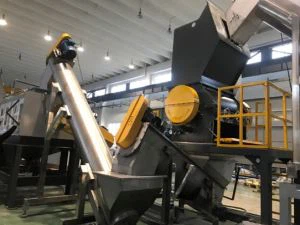



Why Choose Us
Quality assurance
High efficiency at high capacities, high quality standard recycling plant at Reasonable investment, GET recycling equipment and lines support operational excellence and economic performance for each customer.
Good service
GET is one of your ideal partners in the field of recycling from beginning of negotiation to seeking for best solutions, and from machines manufacturing to after-sales service.
Reasonable price
Demand the highest prices of the end product.
Fast delivery
High efficiency at high capacities, high quality standard recycling plant at Reasonable investment, GET recycling equipment and lines support operational excellence and economic performance for each customer.
What are the Characteristics of the Pet Recycling Line?
Polyethylene terephthalate (PET) is a type of plastic commonly used in beverage bottles, food containers, and other packaging applications. Recycling PET has significant environmental and economic benefits. To recycle PET, a PET recycling line is used.
Here are the characteristics of a PET recycling line:
Sorting
To begin the recycling process, the PET material needs to be sorted from other plastics, such as PVC or polystyrene. A PET recycling line uses various methods to perform this sorting, including manual sorting, sensors, and air classification systems. The sorting process is crucial to ensure higher quality recycling.
Washing
After sorting, the PET material goes through a washing process to remove any impurities or contaminants such as dirt, labels, or food residue. The washing process in a PET recycling line includes several stages, such as pre-washing, hot washing, rinsing, and drying. The washing process ensures that the recycled PET material is clean and free of any contamination.
Grinding and Shredding
Once the PET material has gone through the washing process, it is shredded and ground into small flakes to prepare it for further processing. The grinding and shredding process in a PET recycling line can use several different types of equipment, including granulators or shredders. The output PET flakes must be a consistent size to ensure a high-quality final product.
Extrusion
After grinding and shredding, the PET flakes need to be melted and extruded into pellets. The extrusion process in a PET recycling line involves heating and melting the PET flakes and then forcing the melted material through a die to shape them into small pellets. These pellets are then cooled and can be used to manufacture new products.
Quality Control
Throughout the PET recycling line process, several quality control measures are taken to ensure that the recycled material meets the desired quality standards. These measures include testing the PET flakes for purity, moisture content, and other quality characteristics.
A PET recycling line is a highly specialized process that requires a range of equipment and expertise to recycle PET material efficiently. The characteristics of a PET recycling line include sorting, washing, grinding and shredding, extrusion, and quality control measures. Through efficient and consistent processing, a PET recycling line can produce high-quality recycled PET pellets, reducing waste and contributing to a more sustainable and eco-friendly future.

Our complete PET bottle recycling line is an ideal solution for anyone looking to start or improve their plastic bottle recycling business. The final products are clean PET flakes which can be sold at a good price.
Plastic bottle recycling line mainly includes plastic bottle label removal machine, plastic crusher, high-temperature washing barrel, rubbing washing machine, dewatering machine, etc.
This PET bottle washing line is mainly used to recycle waste mineral water bottles, cola bottles, plastic bottles made of PET. Shuliy Group can match different PET bottle washing plant, design factories, and calculate factory areas according to customers' different production needs, uses, and raw materials.
Recycling steps: Removing bottle labels — removing bottle trademarks — crushing — cleaning — drying — storage
Raw material & final products of plastic bottle washing plant
PET plastic bottles are widely used for packaging carbonated beverages, mineral water, fruit juice, and other kinds of beverages, they are the most used beverage packaging nowadays. More than that, PET is also widely used in food, chemical, pharmaceutical packaging, and many other fields. 650 billion PET bottles were produced and sold globally, and the increasing speed is still rising.
Step 1: Convey and picking (auto conveyor)
The picking table is made of belt conveyor steel frame structure, PVC belt with scraper, bend pulley, driving pulley, as well as adjustable speed motor, etc. It can be used in different fields, here it is the necessary equipment in plastic bottle recycling line.
Due to PET and PP PE are different materials, the processing of treatment is different, in order to increase the purity of final PET flakes, it is better to select the different material first.
Step 2: Remove trademark (plastic bottle de-labeling machine)
PET bottles label removing machine is professional in removing PET bottles label or water bottles label, it instead of people removing the label, to meet the big capacity requirements of the plastic bottle recycling line. By adjusting the blades, it can use for removing different size bottles.
Step 3: Crushing (plastic crusher)
The plastic crusher is used for crushing PET bottles, PVC, etc, it can crush the raw material into small flakes to recycle the waste plastic. The PET crusher is suitable for the plastic bottle recycling line.
Step 4: Cleaning (washing tank)
The washing tank separates PP or PE bottle caps from PET flakes, and also can clean the plastic flakes for the first time.
Step 5: Cleaning with hot water(hot water washing tank)
The hot water washing tank is an upper open structure with functions of automatic temperature control, heat preservation, and stirring. Which also has the advantages of fast heat transfer, large temperature difference, and convenient cleaning.
Widely used in waste plastics and other industries as heating, cleaning treatment. The hot water washing tank is especially suitable for small, medium, and large cleaning chemical fiber factories. And can adopt a completely closed structure according to technological demand.
Step 6: Friction cleaning (friction machine)
As one kind of plastic cleaning equipment, a high-speed friction machine has its own unique function and advantage in the use of cleaning equipment.
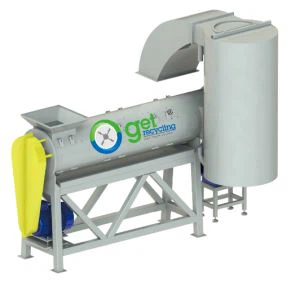
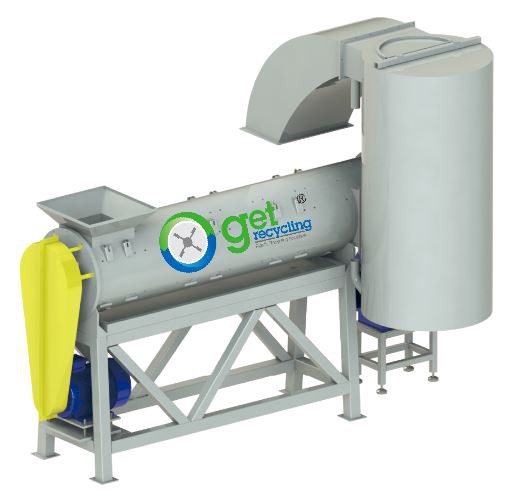
The high-speed rotating screw allows the material to be fully rubbed with water, and the impurities (soil, sand, leaves, paper pulp) on the surface of the material are separated, and the dirty goods are washed with clean water. Unique water spraying design and high-speed running screw ensure an excellent cleaning effect.
Step 7: Washing and separating again (washing tank)
The washing tank is for washing and separating PP PE from PET again. Some materials need to be washed multiple times. Due to customer's requirements, broken plastic needs to be cleaned four times in the plastic bottle recycling line. In this operation, the plastic pieces would be separated and cleaned thoroughly, all impurities would be removed.
Step 8: Drying and dehydration (dehydrator machine)
The plastic dehydrator machine is mainly used for the dehydration function of PP pellets so that the finished product can meet the storage requirements.
The wet PP particles are gradually raised by the auger of the plastic dehydrator machine, and more water is extracted by the principle of high-speed rotation. The machine can automatically feed and discharge, with no need for manual operation, and greatly improve work efficiency.
Step 9: Storage (storage bin)
Dried PET pellets were conveyed by the fan. Stock bin and packing machines not only can store final PET pellets but only can separate different materials. Stainless steel stock bin and packing machine plays important role in the transportation and packing of bags.
Recycled PET Flakes Quality
Pellet Sizes: Recycled PET flakes are often made into different pellet sizes depending on the specific requirements of the production. Common pellet sizes are usually around 2-3 centimeters.
Color: The color of PET recycled flakes can vary depending on the source of the raw material and the treatment process. Common colors include transparent, blue, green, etc. The exact color is determined by the customer's raw material.
No Impurities: Recycled PET pellets should contain the lowest possible level of impurities. Impurities can be from other plastics that were not completely removed during the recycling process, grease, color, etc.
Moisture: PET is a moisture-sensitive plastic, so recycled PET flakes usually needs to be dried, and our recycling lines process PET flakes with less than 1% moisture.
Washing machines of PET bottle washing plant
The necessary washing machines for cleaning PET flakes are a washing tank, hot water washing tank, and frictional washing machine. In fact, the PET washing machines are adjustable to choose from, people with a low budget can choose these three machines to wash their plastic flakes.
But if the waste plastic bottle is too dirty or the plant would like to use more washing equipment to ensure the plastic's cleanliness, the number of washing tanks, hot water washing machines, and frictional washing machines can increase to two or three.
PET bottle washing line
Our plastic bottle recycling line can also adjust the kind of washing machine according to the customer's order and the raw material. The whole washing step includes three washing machines, which are two washing tanks, a hot water washing tank, and a friction machine. The following video shows the customized plastic bottle recycling line which uses only one piece of washing equipment.
How are Recycled Plastic Bottles Reused?
Many people may wonder where recycled plastic water bottles have gone. In other words, many people know that plastic bottles can be recycled, but they don't know what they can do after recycling.
Firstly, recycled plastic water bottles can be used to make textile materials, such as polyester, RPET cloth, etc., and then made into gloves, mattresses, etc.
Secondly, recycled plastic PET bottles can be granulated into pellets, which can be made into various toys, buckets, and other daily supplies.
After multiple processing or prolonged UV irradiation, plastics will cause problems such as aging and viscosity reduction. This waste plastic can also be recycled for RDF power generation. Due to the high heat value of plastic, the power generation effect is very ideal.
Prospects of the Plastic Bottle Recycling Business
A large part of the production of plastics depends on petroleum. The recycling of plastics is the recycling and utilization of petroleum resources.
From a macro perspective, the prospects of the plastic water bottle recycling industry are very optimistic. At present, the main recycling industries include waste metal recycling, waste paper recycling, waste rubber recycling, and waste plastic recycling. The reuse rate of waste metal can reach 70-80%, the waste rubber can reach 47%, and the waste paper 20-30%. However, the reuse rate for plastic is less than 30%.
Therefore, the recycling market of waste plastics is still very broad, and the plastic bottle recycling line is also very popular and practical. Combined with the global attention to environmental protection, resource conservation, and other issues, the requirements of plastic recycling equipment will keep increasing, and the development potential of the plastic recycling industry will only grow.
Profit of plastic recycling business
The main methods of dealing with plastic waste mainly include incineration, disposal in a landfill, and recycling. Plastic waste recycling maybe not be a very profitable business in many people's opinion. Exactly, one plastic bottle has very low value, however, in the big cities, millions of waste mineral water bottles will be produced by people at least, one-ton mineral water bottle probably has 60 thousand plastic bottles,which can make a profit of about 300 dollars.
On the surface, the plastic bottle recycling line is a business with low profit, in fact, if you have a stable supply, comprehensive knowledge of plastic, and a team, plastic recycling is a profitable business for you.

Because the cleanliness of plastic bottles is different, the washing equipment they need is different too. A washing tank, a hot water washing tank, and a frictional machine are necessary for recycling PET bottles, if one has a low budget, he can choose these three machines at least.
But if he has a high budget, he can choose more three PET recycling machines, for example, one washing machine, two or three hot water washing machines, two frictional machines. Machines in different numbers will provide different effects. More cleaning machines can wash waste PET flakes cleaner, which also has a higher price.
Why PET Recycling Machines Become More and More Popular?
Many waste PET plastic bottles are produced every day, which causes great pollution to the environment. Recycling waste is good for protecting the environment.
Turn waste plastic bottles into treasures, it has widely used. People's education level has improved hugely, more and more people started to realize the importance of environmental protection.
Save resources and promote the development of the industry. Recycling plastic waste can help plants save resources and costs, the leftovers of production can be reused, it is good for business.
What Can PET Plastic Be Recycled Into?
Polyethylene terephthalate packaging - or as it's more commonly known, PET packaging - is a popular material for packaging products in a variety of different industries. PET plastic is popular not only for its crystal-clear transparency and durable yet lightweight nature, but also for the positive impact it has had on the environment. PET packaging is 100 percent recyclable and can be broken down to its base elements in order to create a variety of different products. Recycling PET plastic in this way helps decrease the amount of waste that's put into landfills each year and reduces the negative impact such waste can have on the environment. Below are just a few of the many things PET plastic can be recycled into.
New PET containers
The most common use for recycled PET plastic is in retail packaging. PET plastic is made from one of the few polymers which can be recycled back into the same format. This means that old PET plastic bottles or packaging can be easily recycled into brand new PET plastic bottles or packaging, with almost no discernable difference between the two items. PET packaging is used by many different industries, including the beauty, pharmaceutical, and food and beverage industries. Utilizing recycled PET plastic to package their products can help an organization decrease their carbon footprint while still ensuring that their products are well protected and beautifully displayed. PET containers made from recycled PET plastic retain the same structural integrity and almost glass-like transparency as containers made from nonrecycled PET plastic. Perhaps the most notable benefit of using recycled PET plastic in this way is that it can be recycled again and again, thereby reducing the amount of pollution and waste that is placed into landfills every year.
Clothing
It may sound surprising, but PET plastic is actually a common component in many clothing items. As we've stated, PET plastic is made from an easily recyclable polymer. While this polymer can be recycled back into its original format, as is the case with recycled PET containers, it can also be recycled into other formats. In the clothing industry, PET plastic is generally broken down into its base polymers, which are then used to create polyester fabric. Polyester fabric can be put to use in many different clothing items and is a popular choice among many clothing brands because of its durable, lightweight, and often wrinkle-resistant nature. Polyester is also a popular material for creating wind and water resistant clothing. PET plastic can also be recycled into Poly-Fil or Fiber-Fil material, which can be put to use as insulation in winter jackets, snow pants, and even sleeping bags.
Carpeting
Similar to its use in the clothing industry, PET plastic can also be used to make carpeting. Using the same processes to break down PET plastic into its base polymers, the materials are then used to produce polyester carpet fibers. Carpets that utilize polyester fibers are quite stain resistant and durable, yet still incredibly soft. When compared to other carpeting materials, such as nylon, polyester carpets build up far less static electricity, making them a wonderful material for homeowners living in a particularly dry climate.
Recycled Carpeting Made With Plastic
Your feet may be resting on recycled plastic water or soda bottles. Most carpeting is made from plastic fibers such as nylon, polypropylene, or polyester. In recent years, manufacturers have been able to create carpet fiber from recycled plastics, such as the plastic used to make beverage bottles. It takes approximately 50 two-liter bottles to create one square yard of carpet fiber. Like "virgin" plastics, the recycled plastic carpeting fibers often are more stain-resistant and color-fast than materials such as wool, and manufacturing carpeting using recycled plastics produces fewer emissions than using virgin plastics.
Our Factory
Original from Europe from 2002, with over 290 plastic recycling projects currently in operation, G.E.T Recycling gives you a clear advice with a tailor made solution on the basis of your plastics and requirements.GET is one of your ideal partners in the field of recycling from beginning of negotiation to seeking for best solutions, and from machines manufacturing to after-sales service.
